Lemon Balm Salve: Amazing Benefits and Recipe
The Healing Power of Lemon Balm Salve
Lemon balm salve is one of my most trusted herbal salves for calming irritated skin, soothing insect bites, and supporting the healing process of viral sores. As a nurse and mother of five, I’ve turned to this powerful herb again and again for gentle yet effective topical treatments.
Melissa officinalis, also known as lemon balm, is a fragrant herb in the mint family. It’s rich in antiviral properties, anti-inflammatory compounds like rosmarinic acid, and volatile oils that make it incredibly effective for skin health. Traditional knowledge and pharmacological records alike recognize its medicinal properties, especially when used on the affected area.
With regular use of the salve, I’ve seen how well it relieves discomfort caused by the herpes simplex virus, especially during flare-ups on the lips or around the mouth. This simple remedy creates a protective barrier while helping ease pain and inflammation naturally.
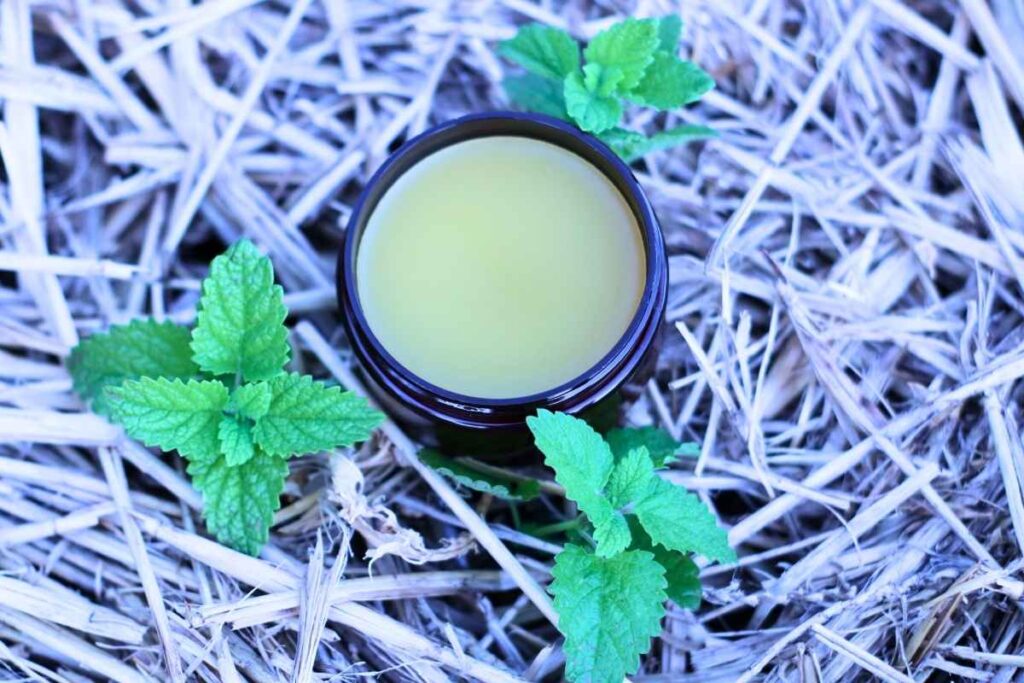
A Natural Alternative With Powerful Benefits
What I love most about lemon balm salve is that it’s made from natural ingredients I can trust. I use organic olive oil or coconut oil as the carrier oil, organic beeswax to thicken the mixture, and pure organic essential oils to boost the soothing effects. There’s no extra cost from store-bought creams, and I know exactly what’s going into each batch.
Making this healing salve at home is a great way to care for your skin without relying on synthetic products. Whether you’re treating dry skin, minor cuts, cold sores, or simply want to nourish your skin with a herbal remedy, lemon balm salve is a time-tested favorite that works.
In the sections ahead, I’ll walk you through the benefits of this powerful herb, the simple step process for making your own lemon balm salve, and tips for how to get the best results with regular use.
Save for Later!

What Is Lemon Balm (Melissa Officinalis)?
Lemon balm, known scientifically as melissa officinalis, is a lemon-scented, fragrant herb that has been valued for centuries for its calming and healing properties. As a member of the mint family, it grows easily in most climates and makes a beautiful addition to any herb garden.
This powerful herb has been used throughout history in both herbal tea and topical treatments. Traditional knowledge and historical data show that lemon balm supports the nervous system, improves skin health, and helps the immune system respond to viral infections.
Modern scientific research continues to explore the medicinal properties of melissa officinalis. The plant is rich in rosmarinic acid, a compound with strong anti-inflammatory and antiviral properties. These qualities are what make it so effective in salves and creams for skin irritations and viral sores.
When used topically, lemon balm is especially helpful for the herpes simplex virus. Applied directly to the affected area, it may shorten outbreaks and reduce discomfort. That’s one of the reasons why I reach for lemon balm salve during the first signs of a cold sore or other viral infection.
A Favorite Herb With a Long History
Over time, lemon balm has earned a reputation as a gentle yet effective remedy for a wide range of skin concerns. Its use has been recorded in both pharmacological records and home apothecaries. I love that it’s safe, soothing, and deeply nourishing for dry skin and minor cuts.
If you’re just starting your herbal journey, lemon balm is a great way to begin. You can grow your own lemon balm at home, dry it for long-term storage, and use it fresh in everything from lemon balm oil to lemon balm cream. It’s a versatile, affordable, and valuable addition to any natural medicine cabinet.
In the next section, I’ll share the skin benefits of lemon balm salve and how it works to support the body’s natural healing process.
Lemon Balm Salve Benefits for the Skin
Lemon balm salve offers incredible support for the skin, especially when dealing with common concerns like dryness, irritation, or viral outbreaks. I’ve used it countless times on my kids’ scraped knees, bug bites, and even cold sores caused by the herpes simplex virus in family members.
Thanks to its antiviral and anti-inflammatory properties, lemon balm helps calm the skin and speed up the healing process. It’s especially helpful when applied at the first sign of tingling or itching from a cold sore. The salve provides a soothing, protective layer over the affected area, keeping it moisturized while your body works to heal.
The natural compounds found in Melissa officinalis, like rosmarinic acid and essential oils, make it a strong ally against viral infections. These antiviral properties are what make lemon balm one of the most effective herbs for topical use on cold sores, viral sores, and skin irritations caused by allergic reactions.
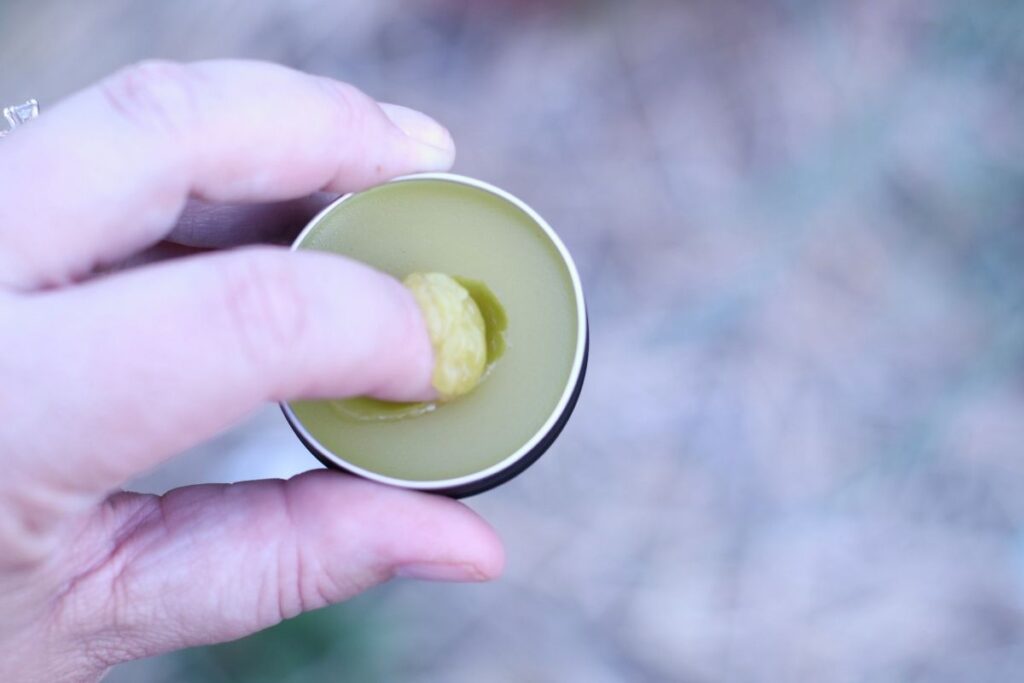
How Lemon Balm Works on the Skin
When infused into a carrier oil like organic olive oil or coconut oil, lemon balm’s medicinal properties become even more accessible to the skin. This process creates a gentle, effective treatment for minor cuts, dry skin, and flare-ups related to the herpes virus.
I’ve found that with regular use of the salve, not only does my skin feel healthier, but I see fewer cold sore outbreaks. The antiviral and analgesic properties help reduce pain, calm inflammation, and support the immune system’s response.
Lemon balm salve is also helpful for soothing sore muscles, improving blood circulation, and softening fine lines. It’s a natural, affordable way to support healthy skin without relying on over-the-counter creams that often come with an extra cost and questionable ingredients.
Up next, I’ll show you how to make your own lemon balm salve at home using dried lemon balm, organic beeswax, and other natural ingredients you probably already have in your pantry.
Lemon Balm Salve Recipe
Ingredients
- 1 cup infused lemon balm oil (made with dried lemon balm and a carrier oil like organic olive oil or coconut oil)
- 1 oz organic beeswax
- 10–15 drops essential oil (optional — lavender or tea tree are great choices)
How to Make Lemon Balm Salve at Home
Step 1: Prepare Your Lemon Balm Infused Oil
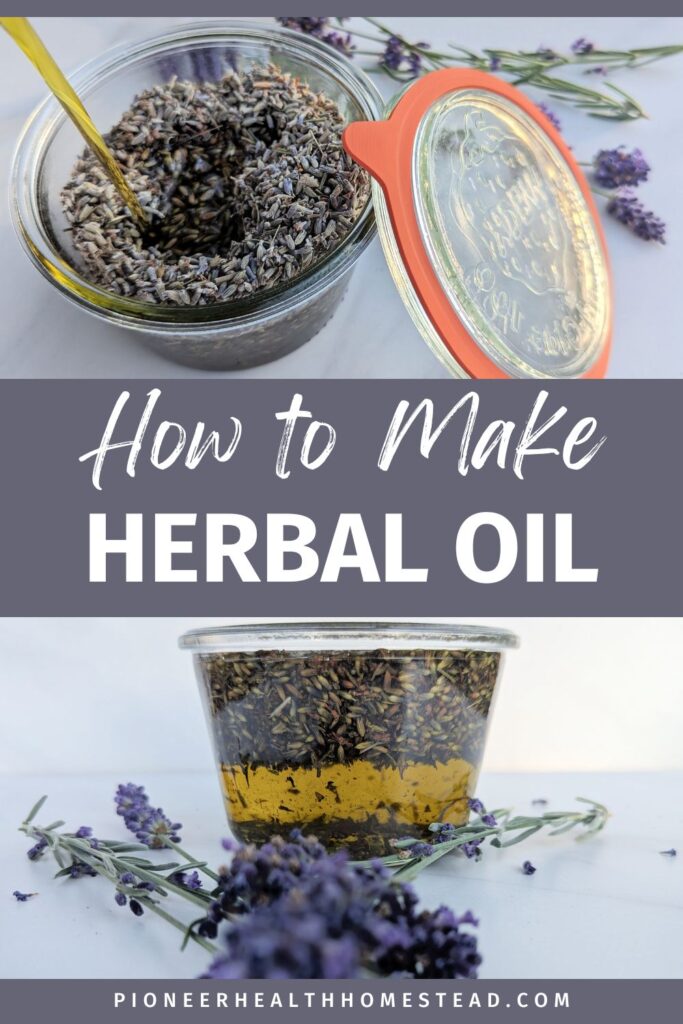
Start with dried lemon balm or fresh lemon balm leaves from your herb garden. Use extra virgin olive oil or coconut oil as your carrier oil.
Heat the oil gently with the herbs using a double boiler or double broiler method. Keep the temperature low to protect the herb’s medicinal properties. Let it infuse for several hours until the oil takes on a light lemon scent.
Step 2: Strain the Herbs
After the infusion, strain out the lemon balm using a fine mesh strainer or cheesecloth. This leaves you with a clear, fragrant lemon balm oil ready for your salve.
Step 3: Melt Organic Beeswax
Measure your infused oil and add organic beeswax. Beeswax helps thicken the salve and creates a protective barrier on the skin.
Melt the beeswax and infused oil together slowly over low heat in your double boiler until fully combined and smooth.
Step 4: Add Essential Oils (Optional)
For extra healing benefits and a pleasant scent, add a few drops of pure organic essential oils. Lavender essential oil and tea tree are excellent choices with additional antiviral and anti-inflammatory properties.
Step 5: Pour and Cool
Pour the warm salve into clean glass jars or small oz tins. Let it cool naturally at room temperature until solid.
Store your lemon balm salve in a cool, dark place to preserve its shelf life and protect the delicate volatile oils.
Lemon Balm Salve
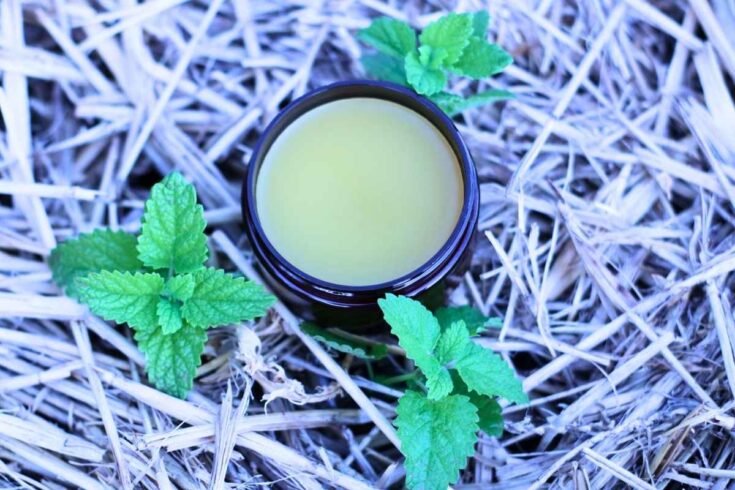
This lemon balm salve recipe is a simple, nourishing way to care for your skin using natural ingredients and traditional herbal wisdom. Infused with melissa officinalis, known for its antiviral and anti-inflammatory properties, this healing salve is perfect for dry skin, minor cuts, insect bites, and cold sores caused by the herpes simplex virus. Gentle enough for daily use, it also makes a soothing lip balm and can be safely applied to the edge of the lips or inside the mouth during outbreaks. This salve is a wonderful staple for any herbal medicine cabinet.
Ingredients
- 1 cup infused lemon balm oil (made with dried lemon balm and a carrier oil like organic olive oil or coconut oil)
- 1 oz organic beeswax
- 10–15 drops essential oil (optional — lavender or tea tree are great choices)
Instructions
- In a double boiler or glass bowl over low heat, combine 1 cup of infused lemon balm oil and 1 oz of organic beeswax.
- Stir gently until the beeswax is fully melted and the mixture is smooth.
- Remove from heat and add 10–15 drops of essential oil if using. Stir well to combine.
- Carefully pour the liquid salve into tins or glass jars.
- Allow the salve to cool completely at room temperature until it has solidified before applying the lid.
- Store in a cool, dark place for the longest shelf life and best results.
Notes
– Use dried lemon balm when possible to prevent moisture from spoiling your infused oil. If using fresh lemon balm leaves, wilt them for 12–24 hours first.
– This salve can be used as a lip balm, applied directly to cold sores, or even inside the mouth near the affected area. Just be sure all ingredients are high-quality and food-safe.
– Store in a cool, dark place to protect the delicate volatile oils and extend the shelf life of your salve.
– Vitamin E oil can be added (about ½ teaspoon) as a natural preservative and skin soother.
– Customize your salve by adding other skin-supportive herbs like calendula officinalis or St. John’s wort to your infused oil.
– If using essential oils, choose gentle, pure organic options. Start with a small amount, especially when using the salve on children.
– This salve is for educational purposes and general topical use. Always test a small amount first to check for any allergic reactions.
Tips for Using and Storing Lemon Balm Salve
How to Apply Lemon Balm Salve
For best results, use a small amount of the salve and gently rub it onto the affected area. Whether you’re treating dry skin, insect bites, or viral sores, a thin layer helps create a protective barrier that supports healing.
If you’re dealing with cold sores caused by the herpes virus, apply the salve at the first sign of tingling or discomfort. Regular use can reduce the duration and severity of outbreaks.
This salve also works wonderfully as a soothing lip balm or for calming sore muscles and minor cuts. Its natural analgesic and anti-inflammatory properties make it versatile for everyday skin care.
Frequently Asked Questions About Lemon Balm Salve
Can lemon balm salve be used on cold sores?
Yes, lemon balm salve can be applied directly to cold sores caused by the herpes simplex virus. For best results, apply a small amount of the salve to the affected area at the first sign of tingling or discomfort. Its antiviral properties support the healing process and may reduce the severity and duration of outbreaks.
Is lemon balm salve safe to use on lips?
Yes, this salve is gentle enough to be used as a lip balm. I regularly apply it to dry, chapped lips and at the onset of cold sores. The natural ingredients like infused lemon balm oil, organic beeswax, and optional lavender or tea tree oil make it safe for regular use around the mouth.
Can I apply this salve inside the mouth?
Yes, you can use a very small amount of lemon balm salve just inside the lips or at the edge of the gumline if a cold sore is forming there. Be sure your ingredients are food-grade and that no synthetic fragrances or questionable additives were used in the preparation.
How long does homemade lemon balm salve last?
When stored in a cool, dark place in a clean glass jar or tin, this healing salve can last 6 to 12 months. Using vitamin E as a natural preservative can help extend its shelf life.
Can I use fresh lemon balm instead of dried?
Fresh lemon balm can be used, but drying the herb first is often safer for oil infusions. Fresh herbs contain moisture, which can cause mold or spoilage. If using fresh lemon balm, make sure it’s thoroughly wilted and use a gentle, low heat infusion method.
What kind of oil is best for infusing?
Organic olive oil or coconut oil are my preferred carrier oils for this recipe. Both are deeply nourishing and help draw out the medicinal properties of the herb. You can also try calendula-infused oil or even St. John’s wort oil for added skin benefits.
Can this salve be used on children?
Yes, lemon balm salve is generally safe for children when made with gentle, natural ingredients. I’ve used it often on my own kids for insect bites, minor cuts, and dry skin. If using essential oils, consider reducing the amount or skipping them altogether for the youngest ones.
Proper Storage for Maximum Shelf Life
To keep your lemon balm salve fresh and effective, store it in glass jars or small tins at room temperature or in a cool, dark place. Avoid direct sunlight and heat, which can break down the volatile oils and reduce the salve’s potency.
When stored properly, your salve can last for many months. Vitamin E added to the recipe can also help extend shelf life by acting as a natural preservative.
Growing Your Own Lemon Balm
If you have space, growing your own lemon balm is a great way to save money and always have fresh herbs on hand. It’s an easy herb to grow in most herb gardens and can be harvested regularly for drying or making infused oils.
Having fresh lemon balm available ensures you can make your own healing salve anytime and enjoy all the benefits of this powerful herb straight from your garden.
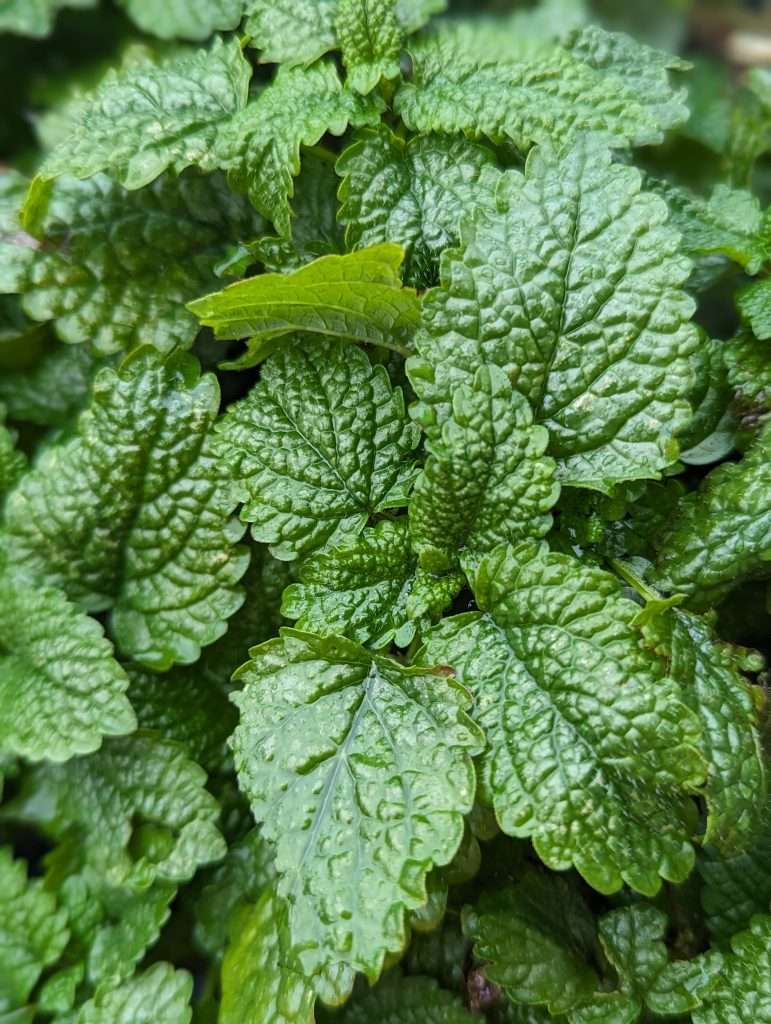
Why Lemon Balm Salve Is a Must-Have Natural Remedy
Lemon balm salve is more than just a soothing skin treatment—it’s a powerful, time-tested herb that supports your body’s natural healing. Over the years, I’ve come to rely on this healing salve for everything from calming insect bites to managing cold sores caused by the herpes simplex virus.
Its antiviral and anti-inflammatory properties make it uniquely suited for viral infections and skin irritations. Plus, using natural ingredients like organic olive oil, beeswax, and pure essential oils means you’re caring for your skin without unnecessary chemicals or extra cost.
Making your own lemon balm salve connects you to traditional knowledge and allows you to create a personalized remedy with ingredients you trust. Whether you keep it in your medicine cabinet, use it as a lip balm, or apply it after a day in the garden, it’s a versatile herbal salve worth having on hand.
If you’re interested in exploring more natural remedies, lemon balm salve is a wonderful place to start. It’s gentle, effective, and supports a holistic approach to wellness that honors both body and mind.
Thank you for joining me on this journey into the amazing benefits and simple recipe for lemon balm salve. I hope you feel inspired to try making your own and experience the healing power of this favorite herb firsthand.
-
Easy Herbal Conditioner Bar Recipe with Chamomile & Calendula
Easy Herbal Conditioner Bar Recipe with Chamomile & Calendula This herbal conditioner bar recipe combines nourishing oils, cocoa butter, BTMS-50, and vitamin B5 for soft, manageable hair. It also features chamomile-infused coconut oil and calendula-infused olive oil for a special herbal touch. Unlike traditional bottled conditioner, solid conditioner bars are highly concentrated and require very…
-
The Best DIY Honey Foaming Face Wash | Glowing, Healthy Skin
The Best DIY Honey Foaming Face Wash for Glowing, Healthy Skin A Simple, Gentle Daily Cleanser You Can Feel Good About I have tried many cleansers over the years, both as a nurse and a busy mom. However, I kept coming back to simple, nourishing ingredients. This honey foaming face wash has become a favorite…
-
Simple Gentle Liver Detox Tea Recipe (Natural & Nourishing)
Gentle Liver Detox Tea Recipe (Natural and Nourishing) A Simple Way to Support Your Body Naturally As the seasons begin to shift, I often notice my body asking for a slower, gentler reset. After months of heavier foods and busy days, everything can start to feel a little sluggish. Instead of turning to harsh detoxes,…
-
Easy Apple Cinnamon Baked Oatmeal Recipe
Apple Cinnamon Baked Oatmeal Recipe This apple cinnamon baked oatmeal recipe is one of those breakfasts that brings calm to busy mornings. I started making baked oatmeal when I needed something nourishing that could feed my family without extra work. This recipe comes together quickly, uses simple pantry staples, and bakes while the rest of…
-
Herbal Calendula and Chamomile Sugar Scrub
Herbal Calendula and Chamomile Sugar Scrub There is something deeply satisfying about making simple body care products with herbs you already know and trust. Over time, I’ve learned that our skin responds best to gentle, nourishing ingredients, especially when they come straight from the apothecary shelf or pantry. This calendula chamomile sugar scrub is one…
-
Apple Mint and Lemon Balm Calm Tea
Apple Mint and Lemon Balm Calm Tea A Gentle, Comforting Blend for Stressful Days When the day feels a little too loud, or your mind just won’t slow down, apple mint and lemon balm calm tea is one of my favorite ways to create a pocket of peace. As a mom of five and an…